Should You Buy or Lease a 2026 GMC Acadia?
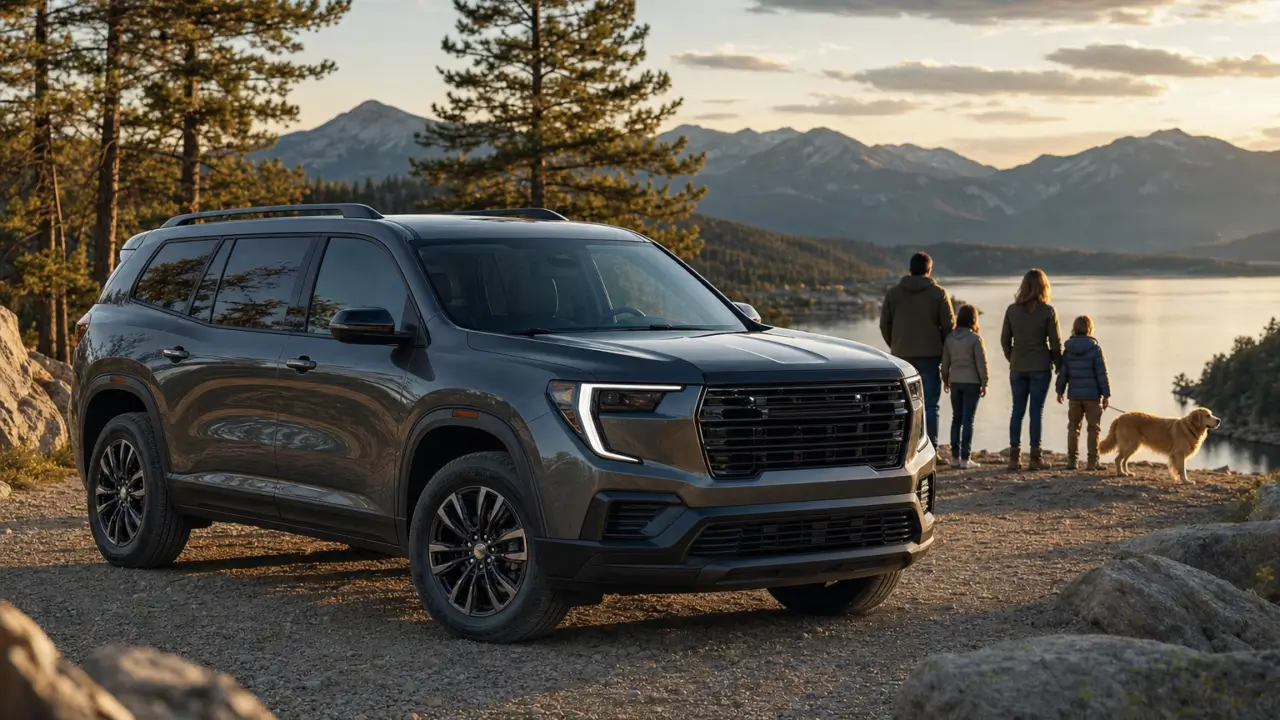
Buy a 2026 GMC Acadia if you expect to keep it for many years, drive unpredictable mileage, tow regularly, or want freedom from lease-end charges. Lease if your mileage is stable, you prefer changing vehicles every few years, and the contract’s total cost is meaningfully lower. For most long-term owners, buying is the stronger choice; for short, predictable use, leasing can be practical.
The right answer depends less on the advertised monthly payment and more on how you will use this three-row SUV. Compare the same Acadia configuration, use the same amount due at signing, and account for equity, mileage, fees, insurance, taxes, and the vehicle’s expected value at your decision date.
Buy-or-Lease Decision Matrix
| Your situation | Likely better choice | Why |
|---|---|---|
| You plan to keep the Acadia six years or longer | Buy | You can continue driving after the loan is paid and are less exposed to repeated acquisition and return fees. |
| Your annual mileage changes significantly | Buy | Ownership has no contractual mileage allowance or excess-mile charge. |
| You regularly carry children, pets, outdoor gear, or trailers | Usually buy | Normal family use may create wear that could be evaluated at lease return. |
| You prefer a new vehicle every two to four years | Consider leasing | A lease offers a scheduled return date without requiring you to sell or trade the SUV. |
| Your mileage is low and highly predictable | Consider leasing | You may be able to select an allowance close to your expected use. |
| You want to modify the vehicle | Buy | Lease contracts commonly require the vehicle to be returned in an acceptable, substantially original condition. |
| You value predictable warranty-period use | Consider leasing | A lease term may overlap much of the new-vehicle warranty, although coverage and lease duration must be checked. |
2026 GMC Acadia Factors That Affect the Choice
The official GMC Acadia specifications identify a standard 2.5-liter turbocharged engine rated at 328 horsepower and 326 pound-feet of torque. GMC also lists seating for up to eight people, up to 97.5 cubic feet of maximum cargo volume, and a maximum available trailering rating of 5,000 pounds.
Those are headline maximums, not promises for every Acadia. Seating depends on the interior configuration, maximum cargo volume requires seats to be folded, and the 5,000-pound trailering figure requires the correct equipment. Trim, drivetrain, passengers, cargo, hitch equipment, and the vehicle’s payload capacity can all affect real-world capability. Verify the window label and the specific VIN rather than assuming every vehicle is configured alike.
Three-row use can make ownership more attractive
An Acadia used for school trips, vacations, sports equipment, pets, or home projects may accumulate miles and interior wear quickly. Buying removes lease mileage limits and return-condition assessments. Leasing can still work for a family, but only when the allowance and wear standards realistically match that family’s routine.
Towing requires more than checking a maximum number
Regular towing tends to favor buying because the owner controls long-term use and maintenance. Either way, consult the GMC manuals and guides for the selected 2026 Acadia. Confirm the trailering package, hitch limits, gross combined weight rating, available payload, tire pressures, and trailer-brake requirements before towing.
Reasons to Buy a 2026 GMC Acadia
- No mileage ceiling: Drive as much as needed without an excess-mile bill.
- Potential equity: Once the vehicle is worth more than the loan payoff, the difference can support a future trade or sale.
- Long-term value: Keeping a reliable vehicle after the loan ends can reduce average annual ownership cost.
- Greater freedom: You can add accessories, subject to warranty, financing, safety, and legal limitations.
- No scheduled turn-in: Scratches, stains, tire wear, and minor damage do not trigger a lease inspection, although they still affect resale value.
- Flexible timing: You decide when to sell, refinance, or trade rather than working around a lease maturity date.
Buying is not risk-free. You carry the Acadia’s depreciation risk, and repair expenses become your responsibility as applicable warranty coverage expires. A longer loan may lower the payment while increasing total interest and the time you could owe more than the SUV is worth.
The Consumer Financial Protection Bureau’s auto-loan guidance recommends looking beyond the payment and comparing the amount financed, annual percentage rate, loan length, and total finance cost.
Reasons to Lease a 2026 GMC Acadia
A lease generally charges for the vehicle’s expected depreciation during the term, plus a rent charge, taxes, and fees. Because you are not financing the entire purchase price, a lease may have a lower monthly payment than a comparable loan. That does not automatically make it less expensive overall.
- Planned replacement cycle: Return the Acadia at maturity and consider a different vehicle.
- Defined term: The contract establishes the mileage allowance, residual value, and scheduled end date.
- Possible payment advantage: Strong lease support or a high contractual residual can reduce the monthly charge.
- Newer technology: Leasing may appeal to drivers who want to revisit infotainment and driver-assistance features frequently.
- Purchase option: Many leases allow a maturity buyout, but the price and applicable fees are controlled by the contract.
Before signing, identify the acquisition fee, disposition fee, mileage allowance, excess-mile rate, wear standards, early-termination terms, purchase-option price, and any required insurance coverage. The Federal Trade Commission’s financing and leasing guide explains why a low advertised payment should not be evaluated separately from upfront charges and contract restrictions.
How to Compare the True Costs
Request a purchase worksheet and a lease worksheet for the same VIN on the same day. Use equal upfront cash so one option does not appear artificially cheaper.
Purchase calculation
For a comparison ending after 36 months, use this framework:
Net 36-month purchase cost = upfront cash + 36 monthly payments + costs not already included − estimated equity at month 36
Estimated equity equals the Acadia’s realistic trade or sale value minus the remaining loan payoff. Because future value is uncertain, calculate conservative, middle, and optimistic scenarios rather than relying on one forecast.
Lease calculation
Net lease cost = amount due at signing + all monthly payments + expected mileage, wear, disposition, and other end-of-lease charges
Ask whether taxes are included in the displayed payment. State and local rules can tax a lease payment, the full selling price, or certain fees differently.
Terms worth understanding
- Capitalized cost
- The lease’s negotiated vehicle price plus any amounts added to the lease.
- Residual value
- The leasing company’s contractual estimate of the vehicle’s value at lease end. It often helps determine the purchase-option price.
- Money factor
- The number used to calculate the lease’s rent charge. Multiplying it by 2,400 provides an approximate APR equivalent for comparison purposes.
- Capitalized-cost reduction
- Upfront money used to reduce the amount being leased. Ask how this money would be treated if the vehicle were stolen or declared a total loss.
Local Driving and Ownership Considerations
Estimate mileage from your real routine
Multiply your round-trip commute by annual commuting days, then add errands, school travel, weekend driving, and vacations. For example, a 32-mile round trip over 220 days is 7,040 miles before any personal travel. Leave a buffer instead of choosing an allowance that only works under ideal conditions.
Account for weather and road conditions
If you are considering all-wheel drive, remember that it can help the vehicle accelerate in low-traction conditions but cannot eliminate stopping or cornering limits. Appropriate tires, correct pressure, tread depth, and slower speeds remain essential. Review NHTSA tire-safety guidance, especially before winter travel or towing.
Check the Acadia’s physical fit
Measure your garage, parking area, and any tight entrances. Confirm the dimensions of the exact configuration and test whether you can open the doors and rear liftgate where the SUV will normally be parked.
Price insurance and local taxes
Obtain insurance estimates for both financing structures. A leasing company may require specific liability limits and physical-damage coverage. Ask for an itemized explanation of sales tax, registration, property tax, and lease-specific treatment applicable at your address.
Consider another body style if your use demands it
If your decision is driven primarily by bed space, heavier work, or pickup-specific needs, compare this SUV analysis with Space Blueprint’s guide to whether you should buy or lease a 2026 GMC Sierra.
Steps to Make Your Decision
- Choose the exact Acadia: Record the VIN, trim, drivetrain, seating layout, packages, and installed trailering equipment.
- Set a realistic ownership horizon: Decide whether you are comparing 36 months, 60 months, or a longer period.
- Calculate annual mileage: Include commuting, family travel, vacations, and a reasonable buffer.
- Request matched written quotes: Use the same vehicle, selling price, trade treatment, and upfront cash.
- Review every lease field: Check the residual, money factor, mileage allowance, fees, purchase option, and return standards.
- Review every loan field: Check the APR, term, amount financed, total of payments, and optional products.
- Verify the vehicle: Check the window label, owner’s manual, warranty documents, and the VIN through the NHTSA recall lookup.
- Compare total cost, not payment: Include expected equity for the purchase and likely turn-in charges for the lease.
Continue researching through the Space Blueprint car guides, then place the two itemized offers side by side. The best Acadia deal is the structure that fits your actual mileage, time horizon, and risk tolerance—not simply the one with the smallest monthly number.
Frequently Asked Questions
Is it cheaper to buy or lease a 2026 GMC Acadia?
Leasing may produce a lower monthly payment, while buying often becomes more economical when the Acadia is kept well beyond the loan term. The answer depends on negotiated price, interest or money factor, residual value, taxes, fees, mileage, and future resale value.
How many miles should I choose for an Acadia lease?
Choose an allowance above your calculated annual use, not below it. Review the contract’s excess-mile rate and ask whether additional miles can be purchased in advance. Available allowances and pricing vary by leasing company.
Can I buy the GMC Acadia when the lease ends?
Often, but not automatically in every contract. Check the purchase-option section for the price, timing, fee, taxes, and eligibility requirements. Compare the total buyout cost with the vehicle’s market value and condition at that time.
Does towing mean I should buy instead of lease?
Regular towing generally makes buying more flexible because you avoid lease-return concerns about mileage and wear. Leasing may still be possible if the contract permits your intended use and the Acadia is properly equipped. Never exceed the limits for the specific VIN.
Should I put a large down payment on a lease?
A large capitalized-cost reduction lowers the monthly payment but does not create ownership equity. Before putting substantial cash down, ask the lessor and insurer how that money would be treated after theft or a total loss.
Is all-wheel drive a reason to buy rather than lease?
No. Drivetrain and financing are separate decisions. Select the drivetrain that suits your roads, weather, and intended use, then compare purchase and lease offers for that same configuration.
Can I end an Acadia lease early?
Possibly, but early termination can be expensive. Alternatives may include a payoff, trade, approved lease transfer, or contract-specific early-return program. Obtain the current payoff and written terms before acting.
Should I lease if I am unsure how long I will need the vehicle?
Usually not. A lease works best when you can reasonably commit to its term and mileage. Buying may provide more timing flexibility because you can sell or trade whenever market value and loan payoff make sense.
Where can I find more Space Blueprint automotive research?
Visit the Space Blueprint home page for additional vehicle ownership and shopping guidance.